world premiere
Xochiyaoyotl
MAXIMILIANO SOTO MAYORGA
In a world where gods were fed by humans, a child is trained to fight in war and preserve the sun god with his life.
‘Xochiyaoyotl’, translated as ‘flower wars’, recalls rituals of Aztec martial arts that was wiped out by the Spanish conquest. We can only imagine what this combat – that challenged the belief in tomorrow every night anew - looked like.
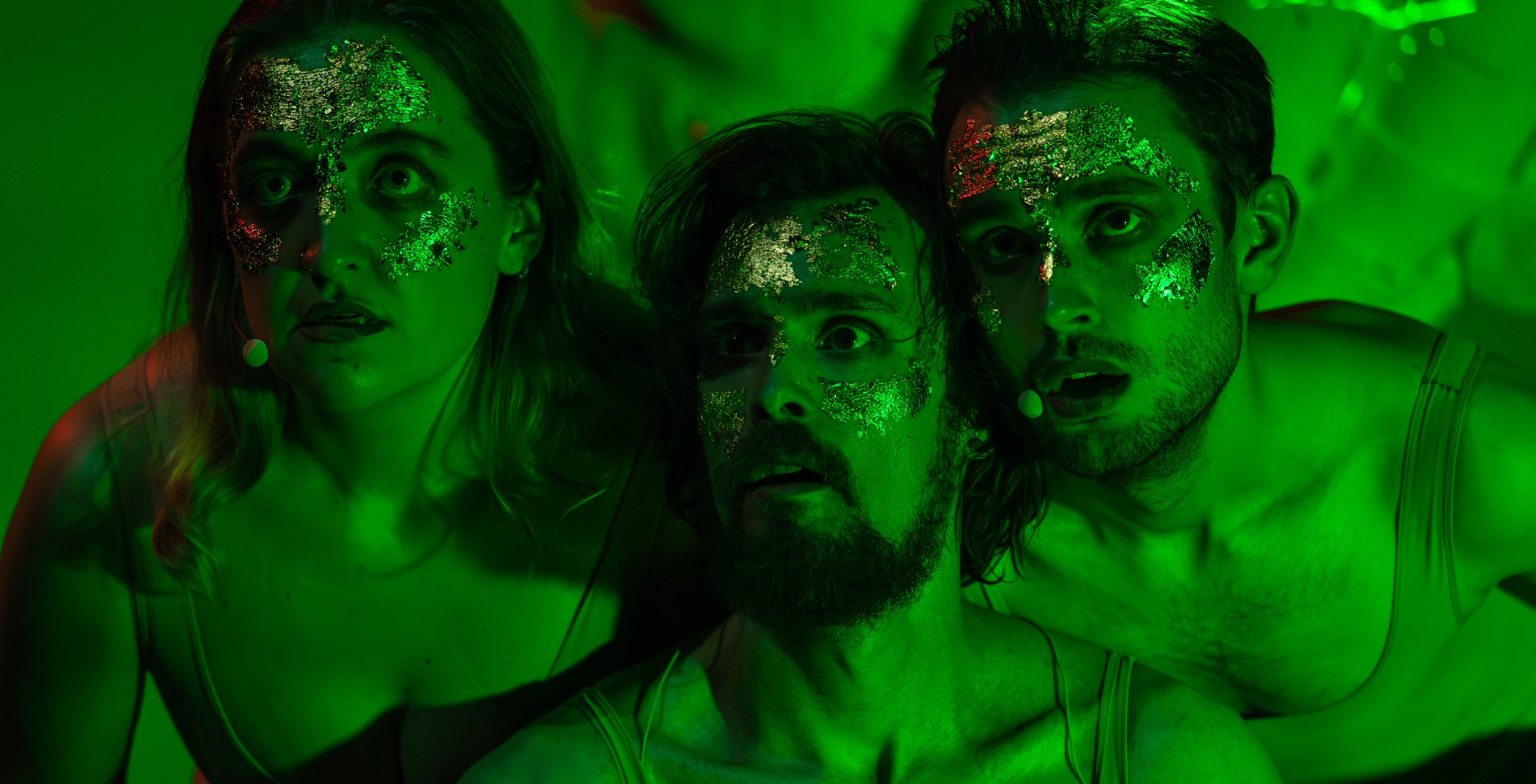
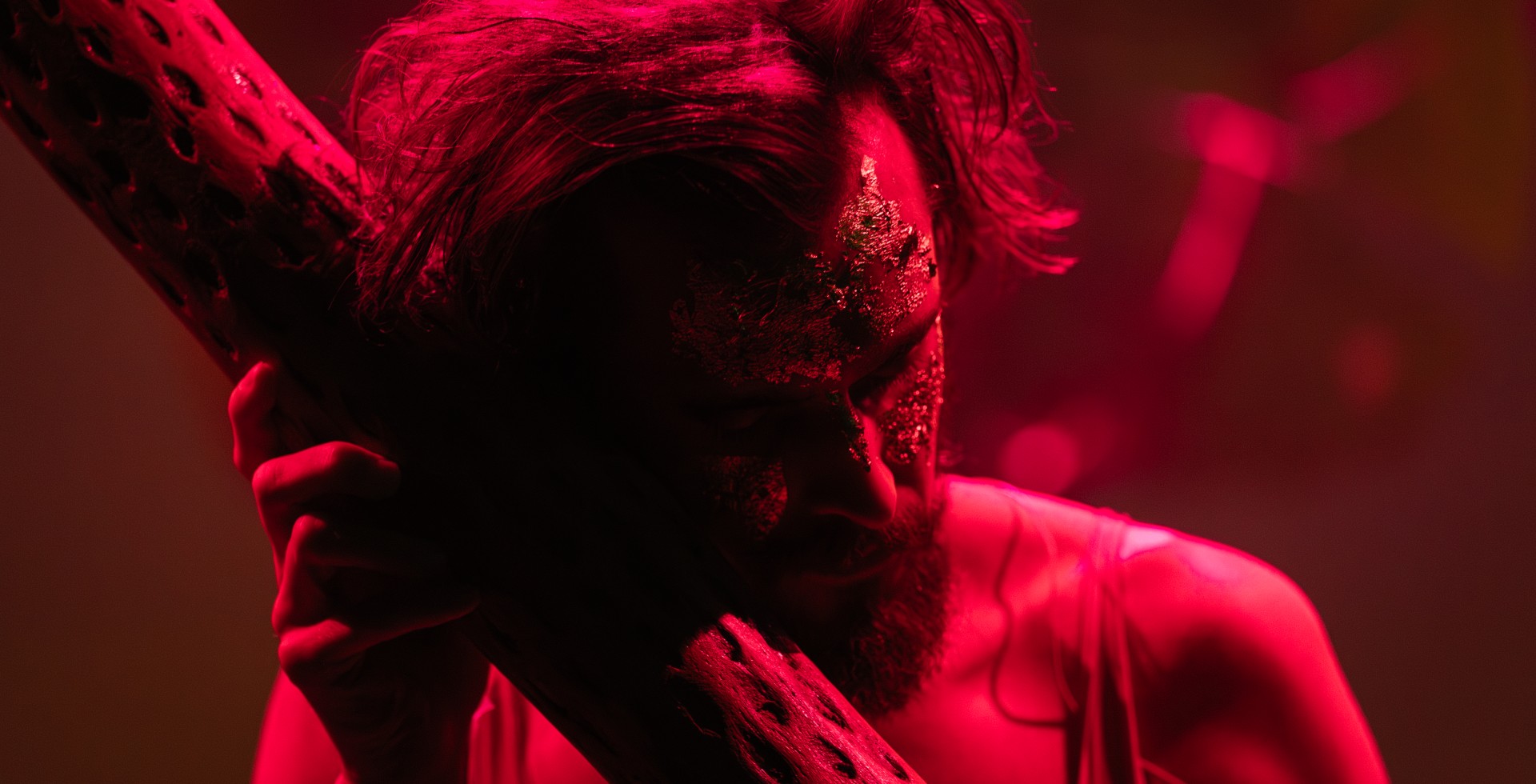
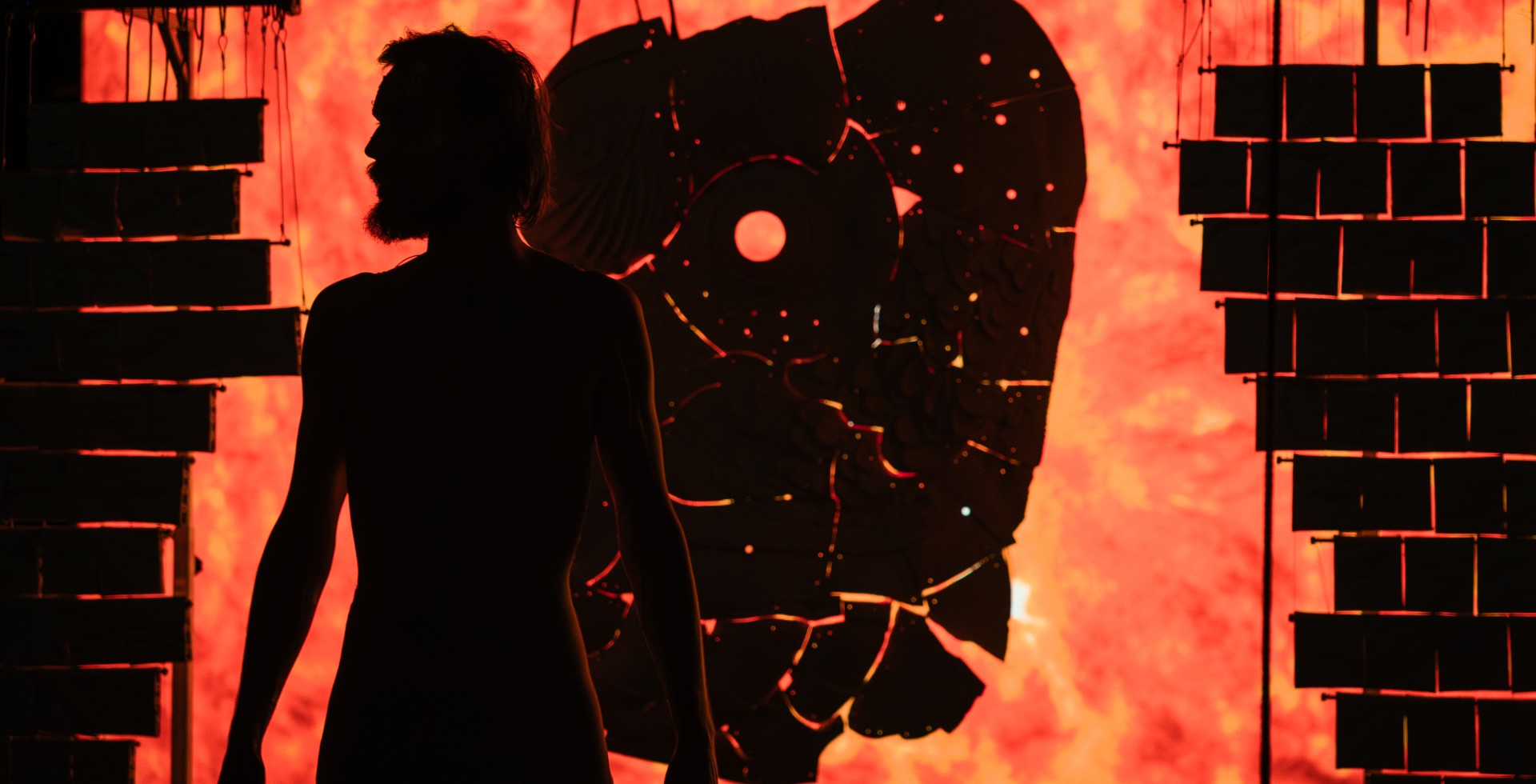
“Xochiyaoyotl” — translated as “Flower Wars” — refers to the ritual combat practices of the Aztecs, extinguished by the Spanish conquest and surviving only in fragmented memory. In a world where the gods were sustained by human devotion and sacrifice, a child is trained for war, destined to give their life to preserve the sun god — told through a timeless sequence of sonic images, memories, and dreamscapes.
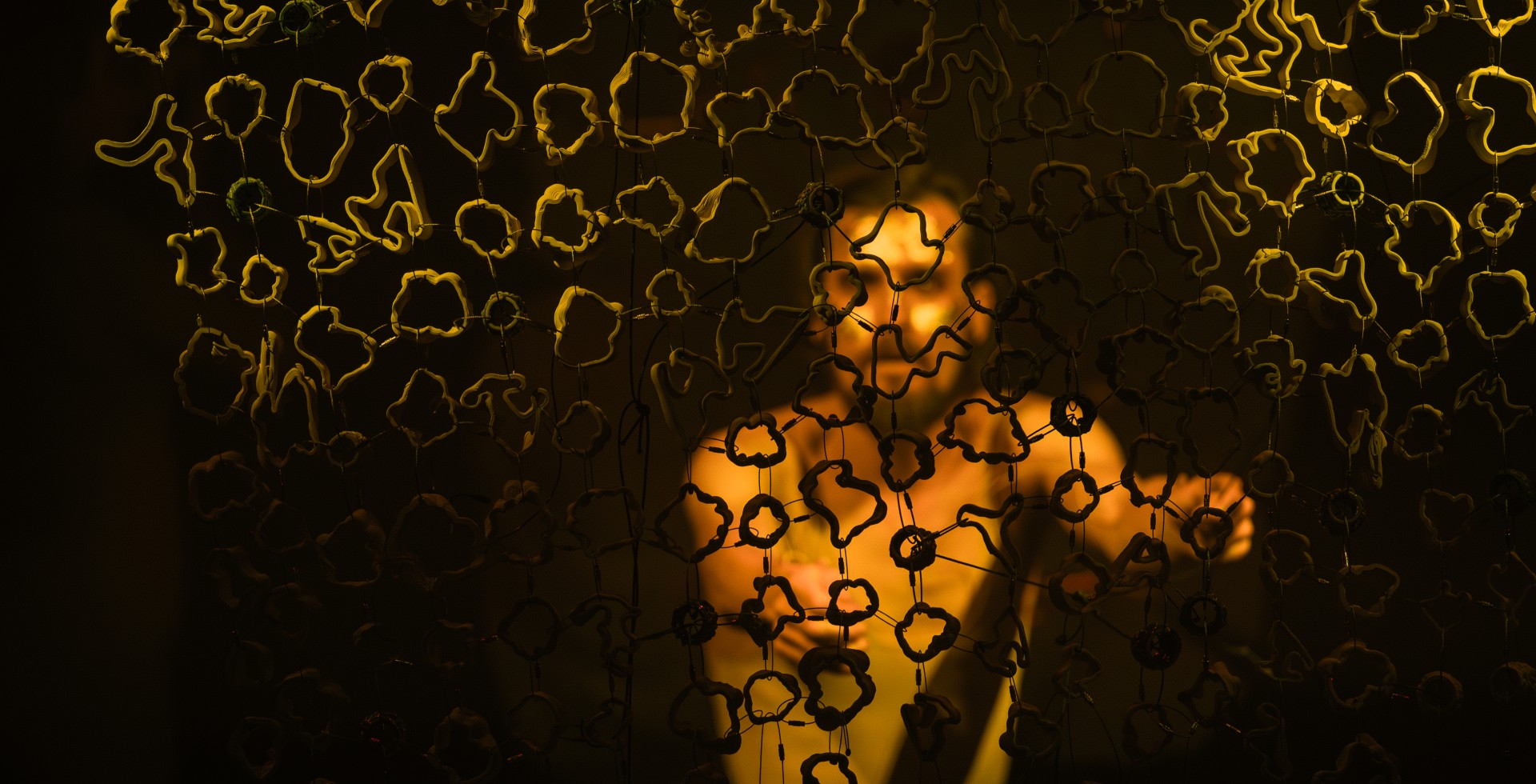
Maximiliano Soto Mayorga, Amauta García, and David Camargo create a music theatre in which sound, space, and movement emerge from the apparent lifelessness of ceramic artifacts, brought into new existence through the presence and performance of human bodies.
“Xochiyaoyotl” is the winner of the OPEN CALL of the Münchener Biennale on the theme of “martial arts”. Chosen from among 85 submissions, the production was selected by an international jury consisting of Carola Bauckholt, Kenny Savelson, Vigdís Jakobsdóttir, Martin Minarik, Sarah Maria Sun, Óscar Escudero and Toshiki Okada.
WED
13.05.
20:00
— 20:50
THU
14.05.
14:00
— 14:50
THU
14.05.
20:00
— 20:50
“Xochiyaoyotl” — translated as “Flower Wars” — refers to the ritual combat practices of the Aztecs, extinguished by the Spanish conquest and surviving only in fragmented memory. In a world where the gods were sustained by human devotion and sacrifice, a child is trained for war, destined to give their life to preserve the sun god — told through a timeless sequence of sonic images, memories, and dreamscapes.
Maximiliano Soto Mayorga, Amauta García, and David Camargo create a music theatre in which sound, space, and movement emerge from the apparent lifelessness of ceramic artifacts, brought into new existence through the presence and performance of human bodies.
“Xochiyaoyotl” is the winner of the OPEN CALL of the Münchener Biennale on the theme of “martial arts”. Chosen from among 85 submissions, the production was selected by an international jury consisting of Carola Bauckholt, Kenny Savelson, Vigdís Jakobsdóttir, Martin Minarik, Sarah Maria Sun, Óscar Escudero and Toshiki Okada.
Composition:
MAXIMILIANO SOTO MAYORGALibretto, video, dramaturgy:
AMAUTA GARCÍASet, costume and instrument design:
DAVID CAMARGODramaturgy:
JULIAN KÄMPERMovement coach:
FRANZY DEUTSCHERMusical rehearsal assistance:
INA STOERTZENBACHSoprano:
LAURE-CATHERINE BEYERSCountertenor:
JOHANNES WIENERSContrabass-clarinet:
PAULA HAENIElectric guitar:
JOHANNES ÖLLINGERCello:
MYRIAM GARCÍA FIDALGOPercussion:
MATHIAS LACHENMAYR, DAAN WILMSCo-production by Münchener Biennale and Styriarte Graz, in cooperation with schwere reiter/scope München. Production commissioned by the City of Munich for the Münchener Biennale.
BODIES IN JEOPARDY
On a Friday morning bare feet strike the parquet floor impulsively. Initially, the collective movement is in rhythm and synchronized, but it is not long before the same sequences of steps take on a different quality of sound: the increasingly sweaty soles of the feet become noticeable the moment the damp skin, stretched over the heel and ball of the foot, detaches from the floor – every new physical movement left hanging in the space like a sonic trail. A command is followed by combinations of turns, kicks and jumps. Then a brief silence, out of which emerges polyphonic breathing, a testimony to bodies under strain, then a new code word triggers the next choric formation. In this training session, during which movement pedagogue and fight choreographer Franzy Deutscher teaches the tradition South Indian martial art Kalaripayattu, sounds and noises serve to indicate how much strength, stamina and breath the participants have left. In this way, a theatre of sound emerges from the martial arts practice. It is like observing a football match through the prism of sound alone and imagining the play of 22 moving figures on the basis of audible rhythm and density– this actually becomes feasible in “FOOSBALL[D]”.
Moreover, physical practices that have different cultural roots, such as kung-fu, running, discus-throwing or table tennis, all possess recognizable acoustic signatures. The so-called Sound Sports Archive, curated by cultural studies scholar Marina Sahnwaldt, aims to preserve the proprietary sounds of trained and ritualized movement patterns. Here, physical techniques specific to each sport are recorded in sound and image and systematized. On the one hand, these sonic documents are intended to expand the cultural history of sport to include acoustic aspects, on the other, they also serve as contemporary historical artefacts within the meaning of museum practice. This is because digital storage media capture a form of embodied knowledge that used only to be passed down orally and practically. Perhaps one exception are rare codices, from whose fragmentary and symbolic depictions earlier forms of movement can now only be reconstructed in part—the production of “Xochiyaoyotl” approaches these lost rituals using theatrical imagination. When music theatre practitioners explore non-musical physical techniques inquisitively and playfully and then integrate them harmoniously into their own practice, context and perception shift idiosyncratically as a result. In music, the motorically precise body, mainly disguised in black, is regarded as an essential medium for eliciting sounds from an instrument. In theater, the awareness of physical presence in space is more natural, even though digital forms of theatre occasionally make the body appear two-dimensional.
Could there be anything more appealing than martial arts or sport-specific movement practices that place the focus of sight and hearing on physical phenomena? When, as in the installation “ARCHE”, martial artists represented and “composed” through media encounter an engaged audience, music theatre becomes immediate. It was with this conviction that Bertolt Brecht formulated his idea of “sport theatre’” which — like a good sports event — captivates the audience and shifts them from a passive, receptive stance into an active, participatory and critical role. In this way, the performance on stage possesses a communicative quality that is not merely intellectual, but instead engages the audience physically, as a form of communication from body to body, as art historian Horst Bredekamp and sports philosopher Gunter Gebauer note in their dialogue on their experience of presence in art and sport: “Experienced, enthusiastic players are always ready, as spectators, to activate their physical schema.” Access to archived and ritualized bodily knowledge opens up hybrid interstices in which it remains deliberately unclear whether the sound triggers the movement or vice versa. Ultimately, one thing applies equally to artists and audiences alike: those who wish to explore the new bring (their own) body into play.
By Julian Kämper
Maximiliano Soto Mayorga about “Xochiyaoyotl”
How did you learn about the Open Call?
We came across the open call online and then developed a concept based on its theme. Entering a competition is like throwing a message in a bottle into the sea: you never know whether someone will find it, whether they will open it, or whether they will even be able to read your language.
The theme of the Open Call was “Martial Arts” – do you have a personal connection to this field?
Yes, I practiced kung fu from 2007 to 2011, which gave me a wide range of physical experiences. But this piece is about a forgotten martial art that is no longer practiced for either physical or spiritual benefit. We are interested in the idea that martial arts emerge as remnants of techniques originally developed for war. In that sense, if Xochiyaoyotl had survived, it might today be just another Olympic discipline, much like shooting with guns or bows. I would not be surprised if, in the future, the Olympic Games were to include competitions involving flying drones.
How did you come up with the idea for “Xochiyaoyotl”?
We wanted to address the experience of a child who is destined to be trained as a soldier — what it means to become an instrument of the imperial and colonizing force of the Aztec empire, while at the same time becoming forgotten and vulnerable to even more devastating forms of colonization through the later conquest by the Spanish. In a figurative sense, the work is not tied to any specific combat technique.
At the same time, the piece can also be understood in a gentler way. Through a form of storytelling that is non-linear, we imagine techniques we would want to teach our own children: to listen to their hearts, to the language of the earth, to the winds and the rain, and to their dreams. In a very particular sense, for me this piece could even be considered a work of science fiction.
For “Xochiyaoyotl”, you are working closely with Amauta García and David Camargo. How and when did the three of you meet? Could you tell us about your respective roles in the creative process leading up to the premiere of “Xochiyaoyotl”?
We met at the Künstlerdorf Schöppingen Foundation, where all three of us were fellows during the autumn of 2024. Through conversation, we discovered our shared interests and began imagining which strategies and compromises might help us win the competition.
Amauta and David work together as a visual artist duo, which makes their approach to music theatre particularly fascinating. They are responsible for the libretto, video, lighting, and costumes — in other words, they shape the space of the work. They also created the ceramic sculptures that form a central element of my musical thinking, serving as focal points both narratively and sonically. The live electronics I developed at the SWR Experimentalstudio are based on sonic samples taken from these ceramic sculptures.
What are your most important musical influences for “Xochiyaoyotl”?
At this point, we have drawn inspiration from many different sources, including fields beyond music such as video art, pantomime, and sound sculpture. I can only invite you to come and experience the piece for yourselves.
MAXIMILIANO SOTO MAYORGA
Composition
DAVID CAMARGO
Stage, costume and instrument design
AMAUTA GARCÍA
Libretto, video, dramaturgy
WED
13.05.19:15
THU
14.05.13:15
Xochiyaoyotl: Was gibt's? schwere reiter
45 Minuten bevor der erste Ton erklingt, fragen wir gemeinsam „Was gibt’s?“ und geben Ihnen erste Einblicke in die Musiktheaterproduktion „Xochiyaoyotl.
THU
14.05.15:15
Xochiyaoyotl: Absacker schwere reiter
Im Anschluss an die Vorstellungen von „Xochiyaoyotl“ laden wir Sie noch zu einem „Absacker“ ein und schaffen Raum, um untereinander und mit den Künstler*innen ins Gespräch zu kommen.
THU
14.05.19:00
— 19:45