Installation
Mineral Amnesia
Ioana Vreme Moser
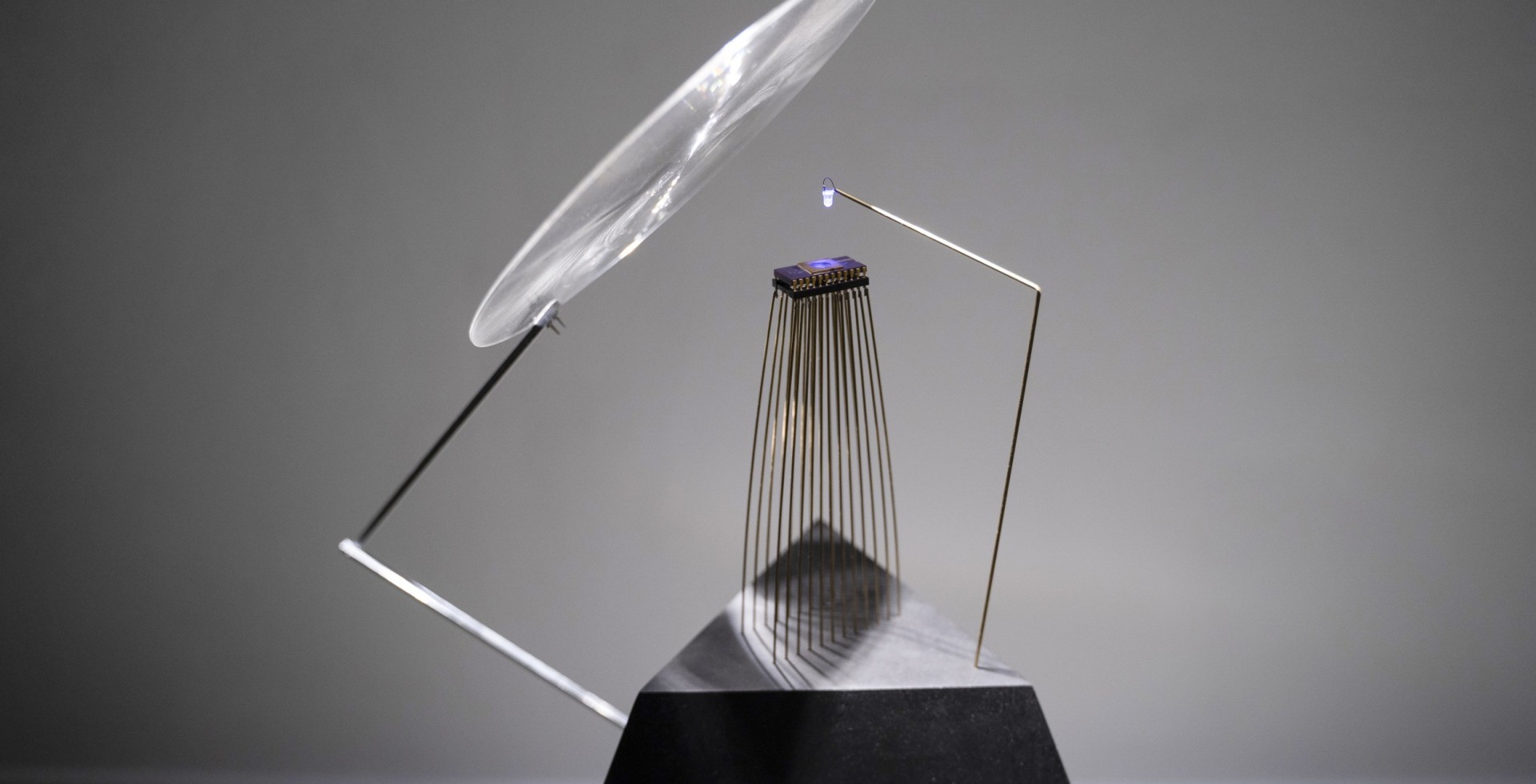
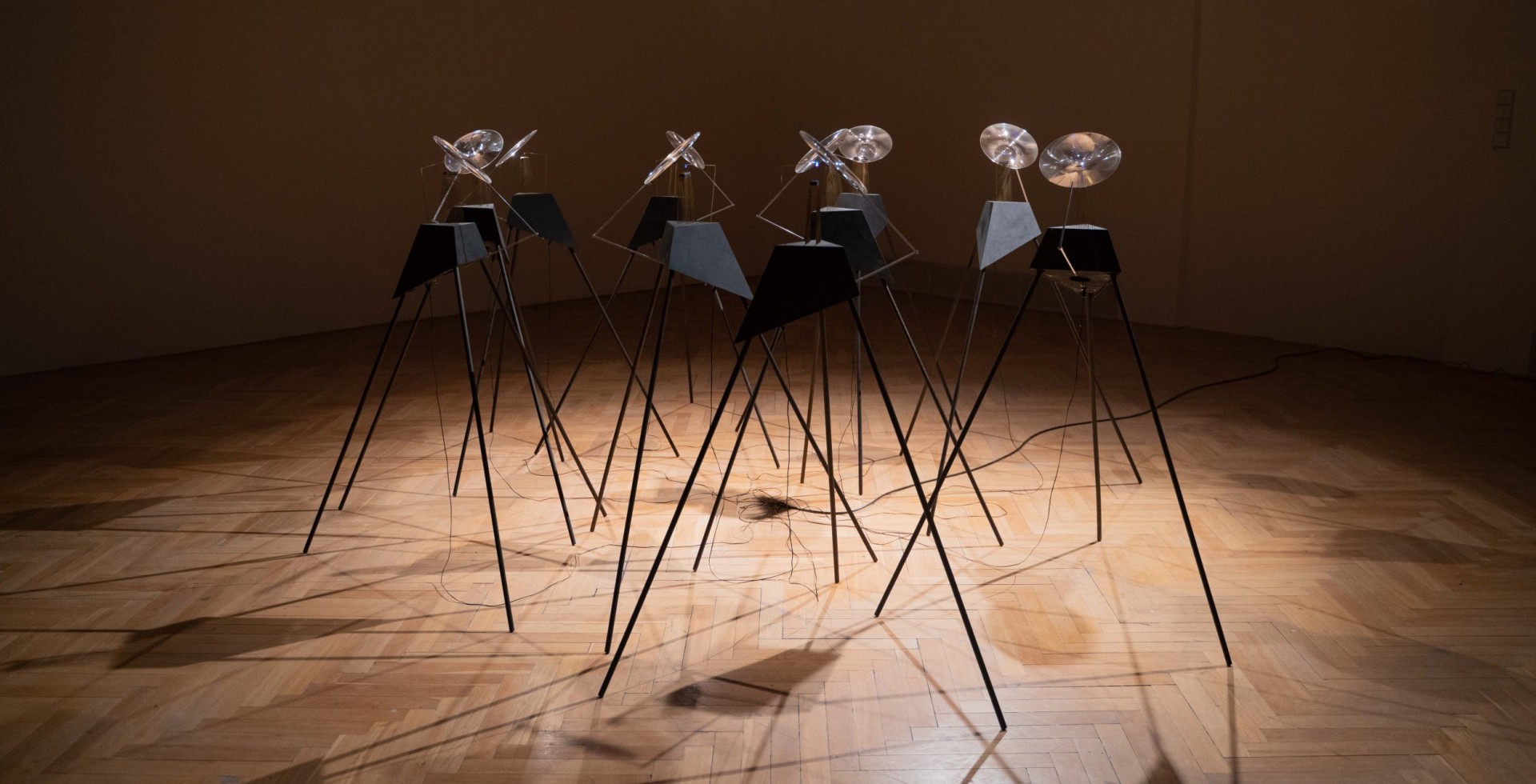
“Mineral Amnesia” explores the evolution and decay of early erasable programmable memory through sound. Encapsulated under quartz windows, EPROMs, now obsolete microchips, lose data when exposed to light. The installation salvages various generations and plays them under UV light until their sounds are eroded and disappear.
“Mineral Amnesia” explores the evolution and decay of early erasable programmable memory through sound. Encapsulated under quartz windows, EPROMs, now obsolete microchips, lose data when exposed to light. The installation salvages various generations and plays them under UV light until their sounds are eroded and disappear.
The work traverses the Digital Dark Age through the lens of an obsolete device. Invented in 1971 near the birth of the microprocessor, EPROMs marked a leap in computing. Their widespread use fueled rapid technological growth, but also led to data becoming lost in old hardware bodies, now dumped to form toxic wastelands across the earth’s geological layer.
THU
14.05.
14:00
— 19:00
FRI
15.05.
20:00
— 00:00
SAT
16.05.
12:00
— 19:00
SUN
17.05.
14:00
— 19:00
SUN
17.05.
20:00
— 22:00
“Mineral Amnesia” explores the evolution and decay of early erasable programmable memory through sound. Encapsulated under quartz windows, EPROMs, now obsolete microchips, lose data when exposed to light. The installation salvages various generations and plays them under UV light until their sounds are eroded and disappear.
The work traverses the Digital Dark Age through the lens of an obsolete device. Invented in 1971 near the birth of the microprocessor, EPROMs marked a leap in computing. Their widespread use fueled rapid technological growth, but also led to data becoming lost in old hardware bodies, now dumped to form toxic wastelands across the earth’s geological layer.
Please note: The installation is not accessible for wheelchair users.
Curated by Dietmar Lupfer – a collaboration between Münchener Biennale 2026 and Muffatwerk München
Commissioned by Simultan Association (RO) and Galerie Nord (GER). With support of Administration of the National Cultural Fund (RO) and Stiftung Kunstfonds, Senatsverwaltung für Kultur und Europa (GER).