world premiere
Isithunzi
MONTHATI MASEBE
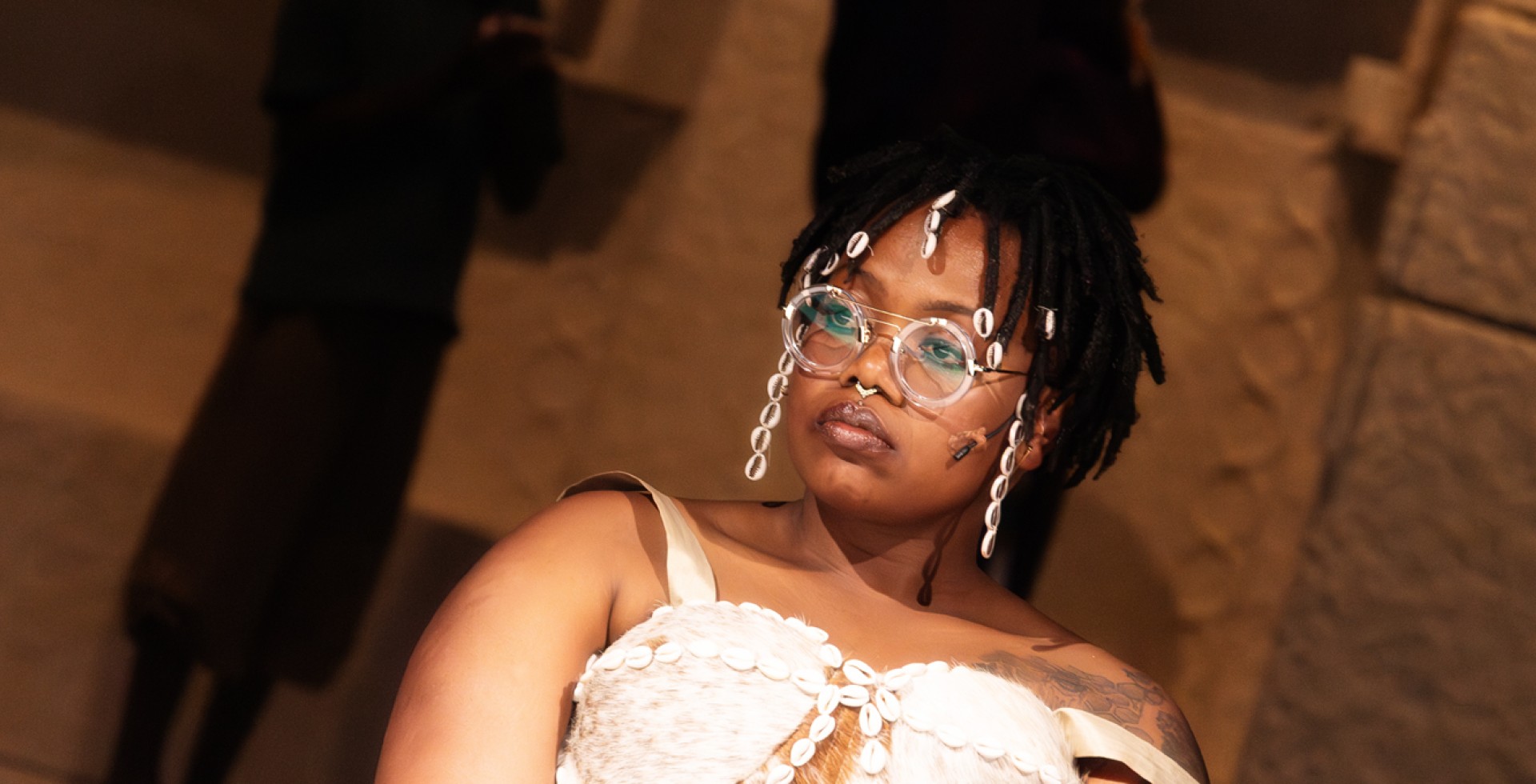
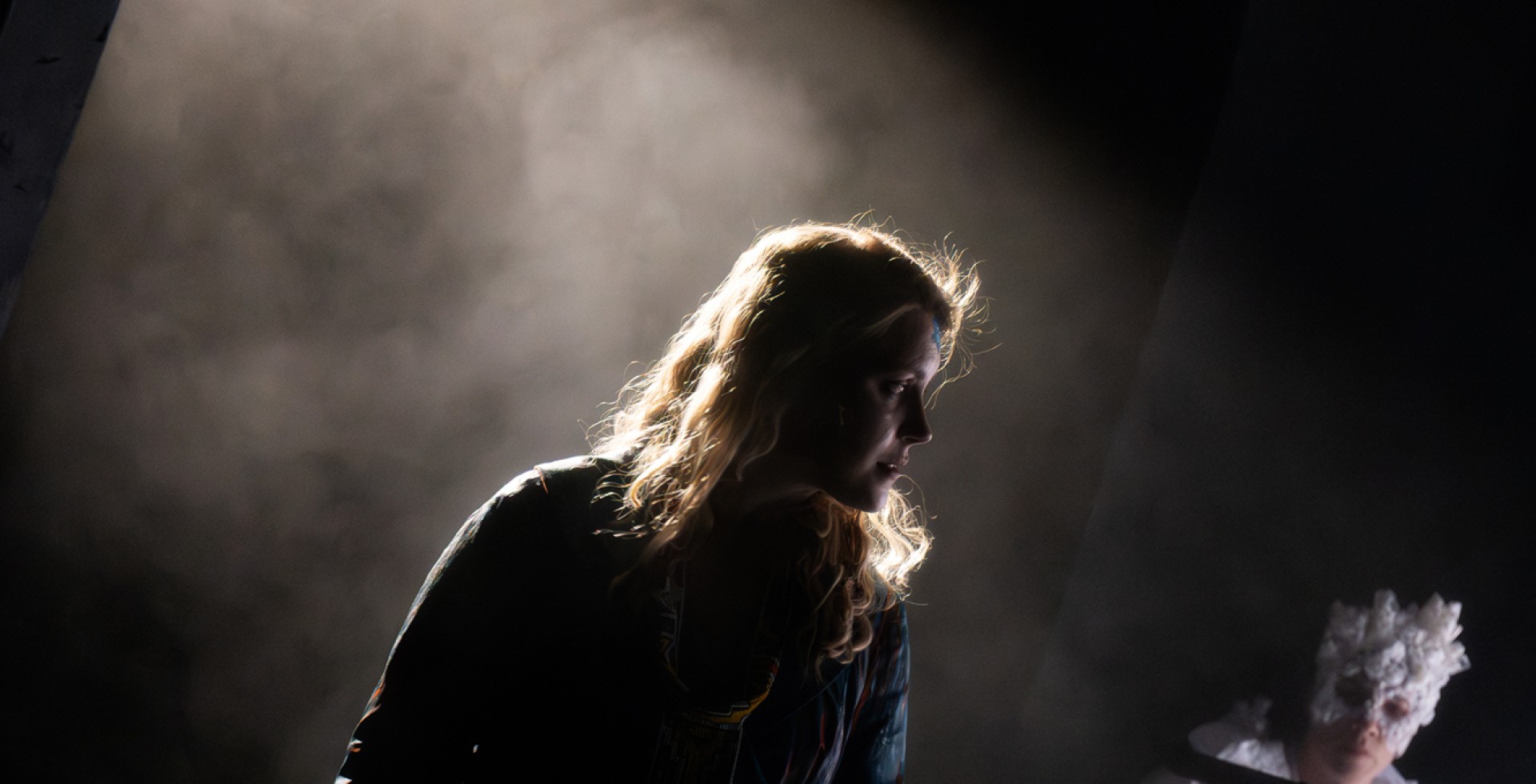
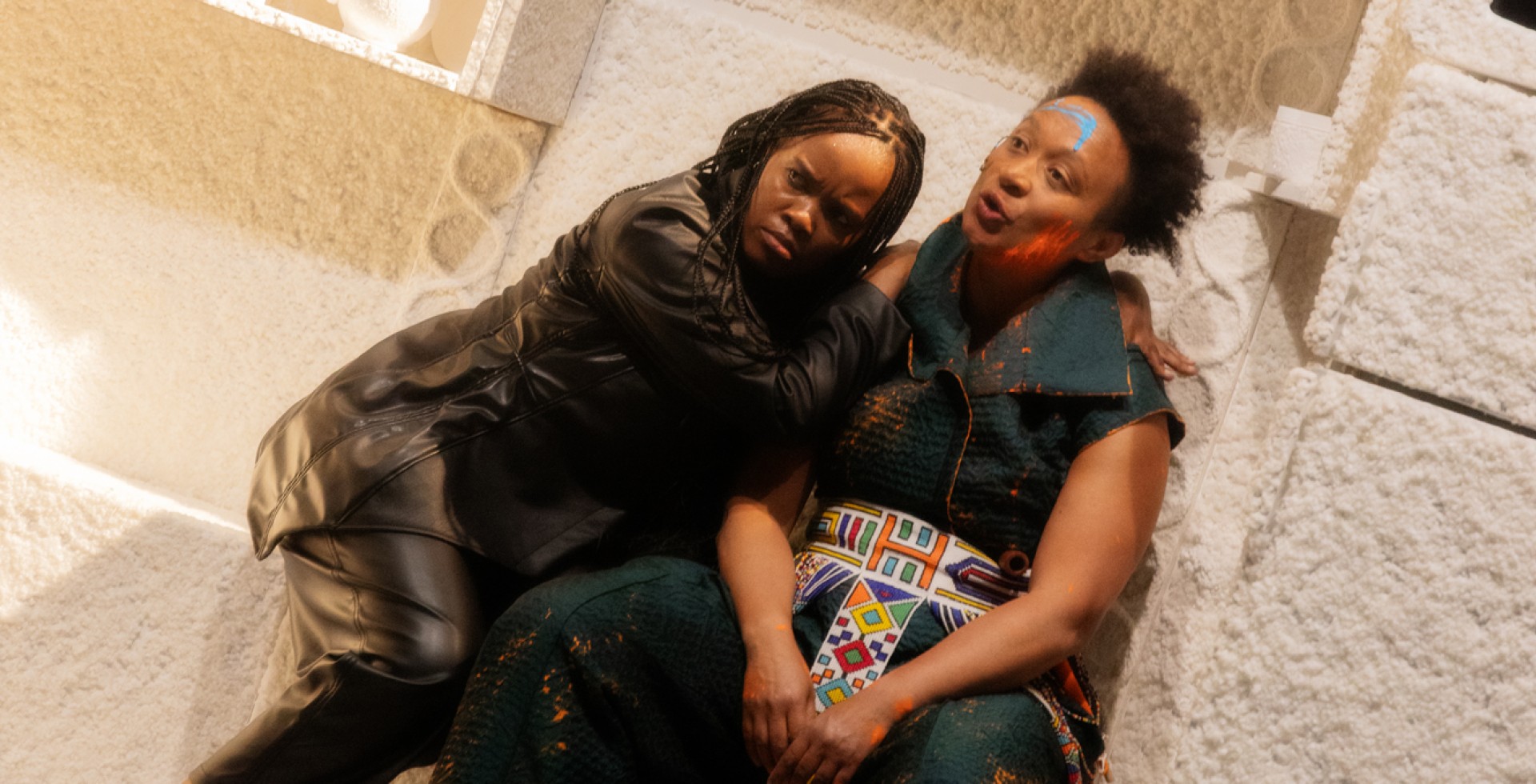
“Isithunzi” means ‘dignity’ in Zulu – but can also be translated as ‘spirit of death and renewal’. The idea: within each of us lies a connection to our ancestors and to a universal energy that gives rise to all life.
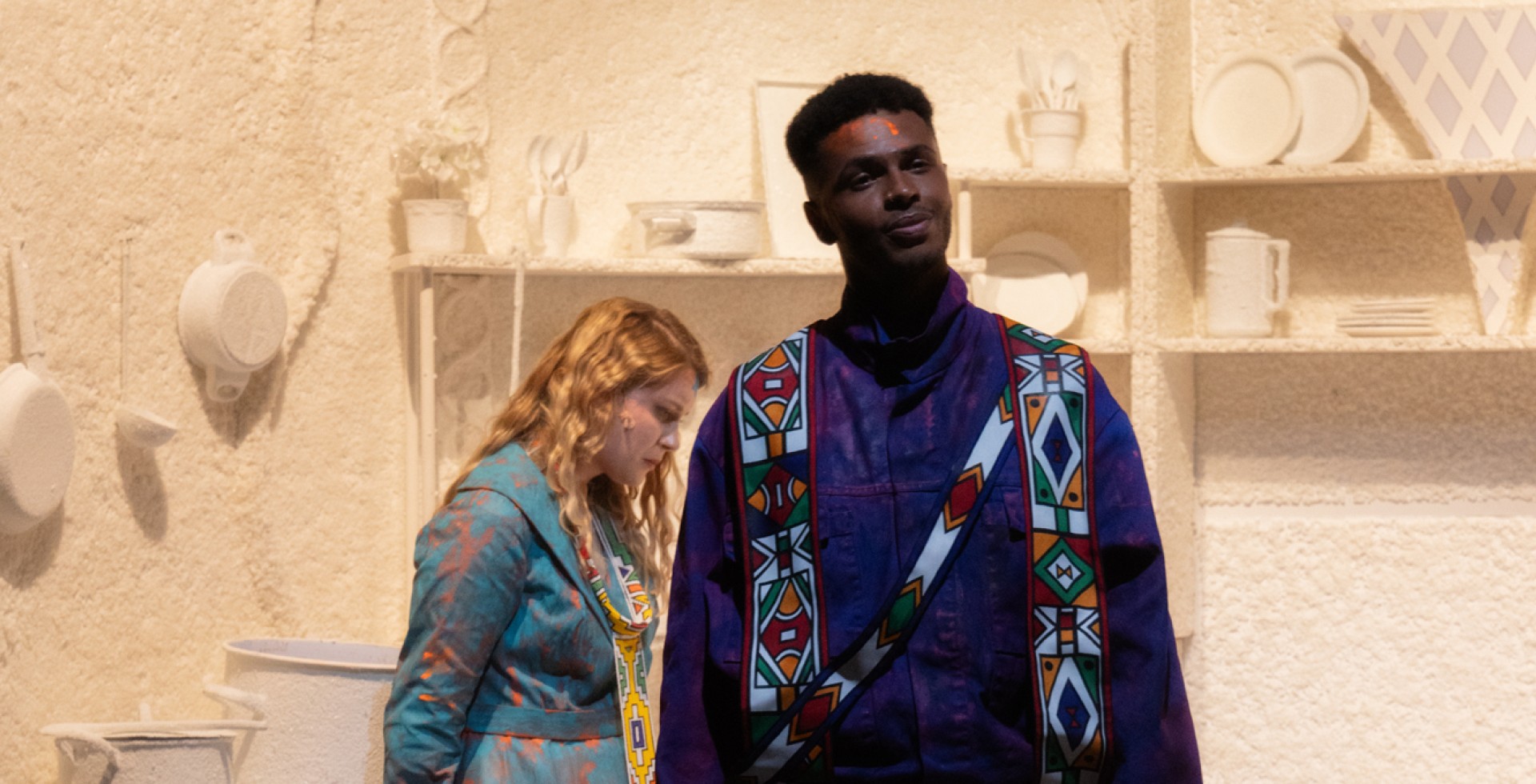
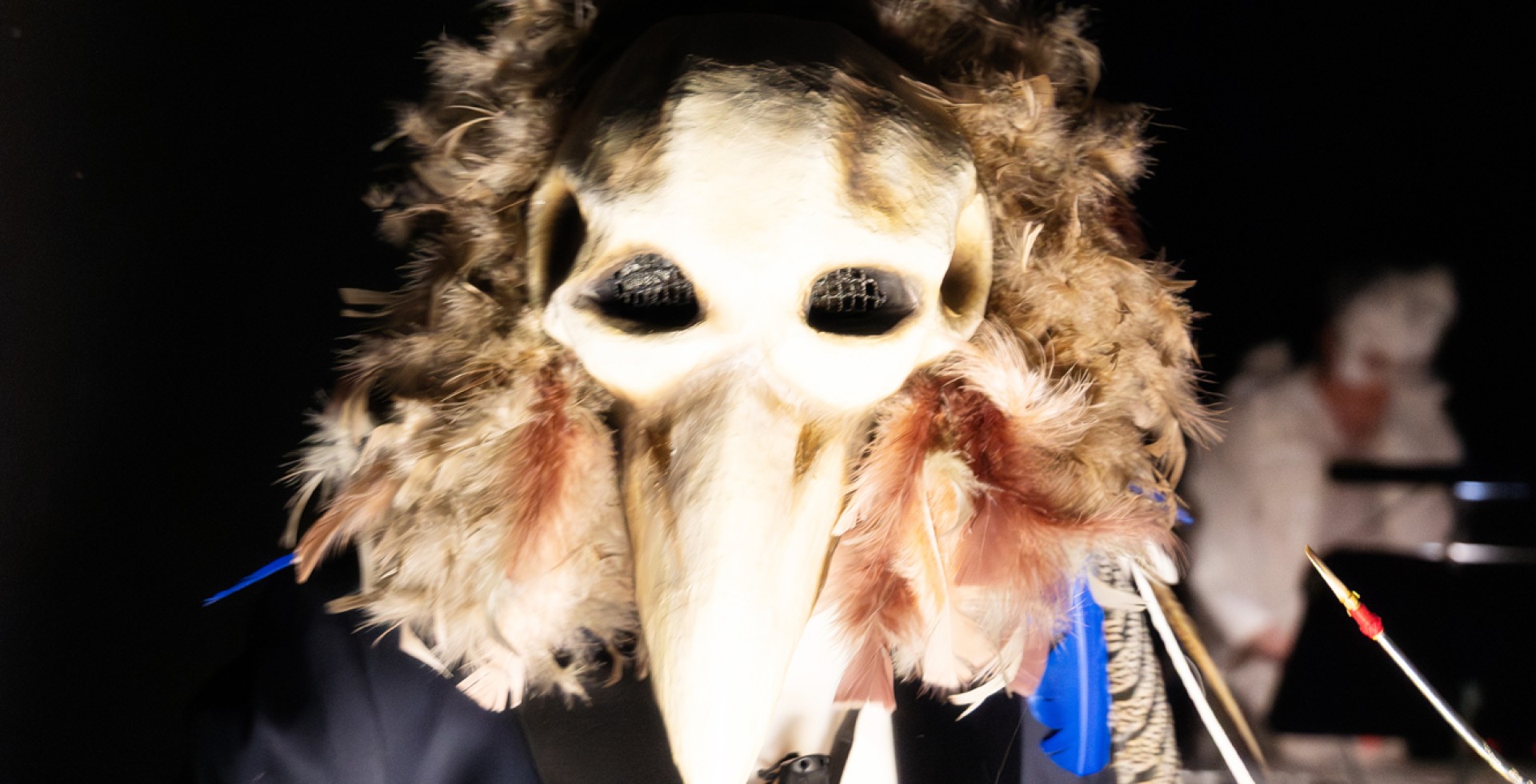
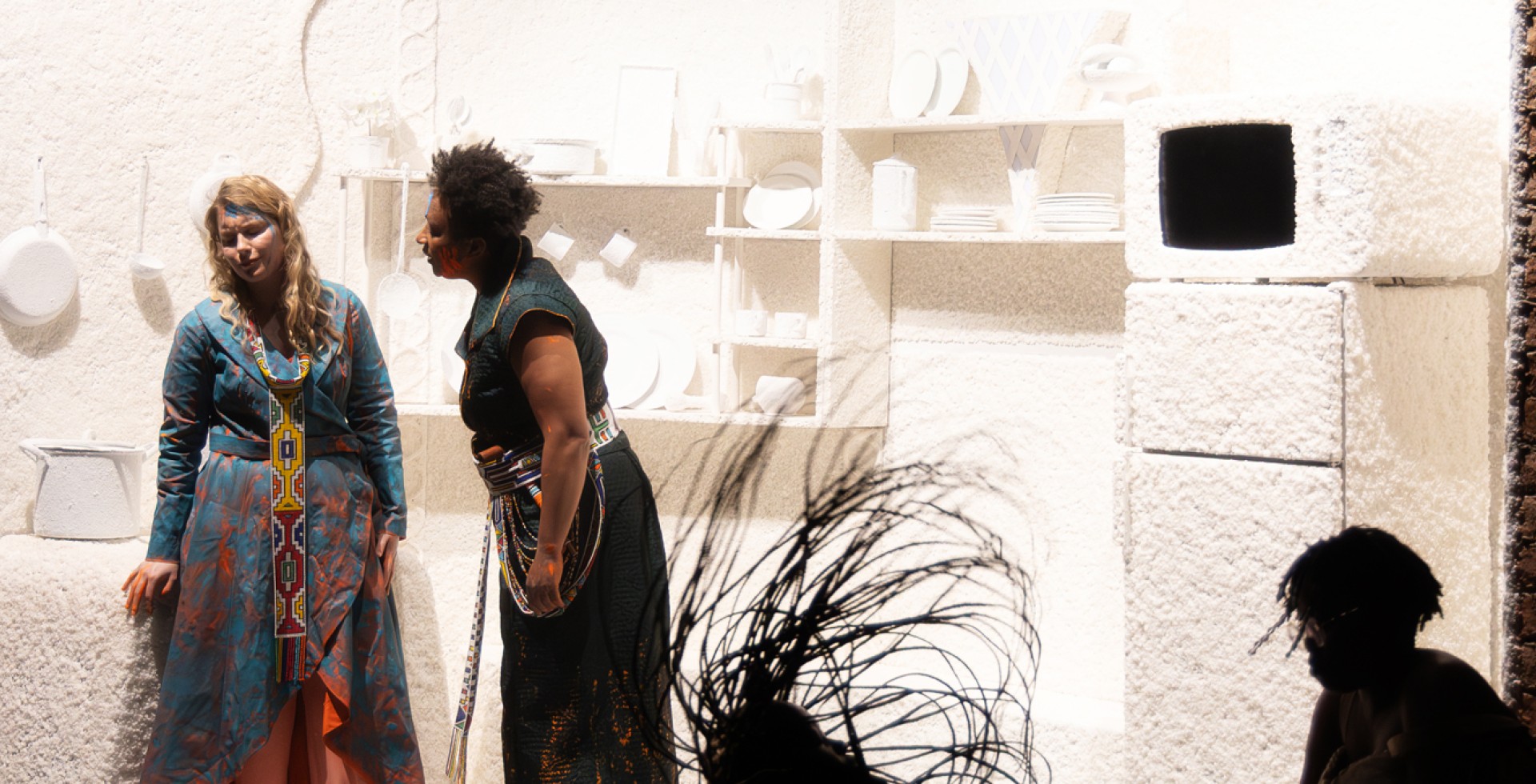
“Isithunzi” means ‘dignity’ in Zulu – but can also be translated as ‘spirit of death and renewal’. The idea: within each of us lies a connection to our ancestors and to a universal energy that gives rise to all life. Based on a text by author Shanice Ndlovu, composer Monthati Masebe tells the story of three protagonists searching for connections in the past and their own identities. For “Isithunzi”, Masebe invites audiences to a cultural encounter, combining Western instruments with South African playing techniques, and will be on stage as a performer of electronic soundscapes.
TUE
12.05.
20:00
— 21:30
WED
13.05.
18:00
— 19:30
THU
14.05.
12:00
— 13:30
THU
14.05.
18:00
— 19:30
“Isithunzi” means ‘dignity’ in Zulu – but can also be translated as ‘spirit of death and renewal’. The idea: within each of us lies a connection to our ancestors and to a universal energy that gives rise to all life. Based on a text by author Shanice Ndlovu, composer Monthati Masebe tells the story of three protagonists searching for connections in the past and their own identities. For “Isithunzi”, Masebe invites audiences to a cultural encounter, combining Western instruments with South African playing techniques, and will be on stage as a performer of electronic soundscapes.
Composition, concept:
MONTHATI MASEBEMusical Director:
TIM HAWKEN, ADAM ROGALALibretto:
SHANICE NDLOVUStage direction, costume design and video:
THERESA MARIA SCHLICHTHERLEStage design:
MARIELLA MAIERAssistance costume design:
MARGARITA BOCKChoreography:
TUMI SHARON MKHONDOSound design:
DOMINIK VOCKLight design:
MARINA RACHNERDramaturgy:
KATJA LECLERCOutside Eye:
JULIEN ENZANZAPerformance:
TUMI SHARON MKHONDOExtra:
BEZAWIT ABATE, BENJAMIN CHUKWUANI, MARCELLINA ESMERALDA DAIGLE MAGGIPINTO, MAYLEEN MANHARDTNdalo (Soprano):
CARMEN MIČIĆThuna (Mezzo-soprano):
CARLA NAHADI BABELEGOTOAmu (Tenor):
MICHAEL BONGANJALO SATTLERBassoon:
BEATRIX LINDEMANN-FRIISVibraphone:
EDZARD LOCHERSinging/Live Electronics/Indiginous Instruments (Uqangi, Umtshingo, Chipendani, Mbira):
MONTHATI MASEBECo-production by Münchener Biennale and Staatstheater Wiesbaden.
Composition & libretto commissioned by the City of Munich for the Münchener Biennale. Funded by the Goethe-Institut with the kind support of the Gisela-Gronemeyer-Stiftung.


WE DON’T NEED WHITE GLOVES!
Archive as musical material
I have noticed a trend within the music scene over recent years: an engagement with music archives. According to the German Music Information Centre, there are a total of 77 such institutions in Germany: 33 of them specialize in classical music, five in contemporary music, and a further five specifically in music theatre. This trend is most likely driven by the debates within the visual arts over the return of artworks from museums to their countries of origin. As early as the 13th edition of documenta, psychoanalyst and cultural critic Suely Rolnik diagnosed a veritable “archive mania” in the globalized art world. Librarian Julia Fertig even warned of an “archival trap”. And in the 1990s and 2000s, the art world began to speak of “archival art”.
Archives have been with us for quite some time. They are like vast palaces of memory, built up over a long period. They relieve us of the burden of having to remember everything and expand the knowledge we share as a society. They determine how history is told and what images and narratives emerge from it. They also decide what is remembered and what is forgotten.
“For me, archives are one of the most important elements of my practice as a composer.” This is the opening line of the interview with Maximiliano Soto Mayorga. His new opera “Xochiyaoyotl”, commissioned for the Münchener Biennale, deals with a lost and effaced tradition — the rituals of Aztec martial arts — whose historical record is fragmentary, filtered through a colonial lens, and almost entirely destroyed. “All we have left are ruins.” This is precisely where the archival core lies: Aztec martial arts rituals no longer exist as a system that can be reconstructed, but rather as scattered historical clues found within archaeological objects, poetic texts and colonial reports. Above all, however: as a void.
If archives not only remember but also suppress, if they not only represent but also purposefully forget, we must be mindful of how we engage with them. Ann Laura Stoler, Professor of Anthropology and History in New York City, even speaks of the archival “watermark of power”, which must be made readable. Not only content, sounds, cassettes, audio tapes, CDs and MP3 files should be heard, but also their conditions in terms of context and power. And this includes not only what is present, but also what is absent, says Maximiliano Soto Mayorga: “We do not want to fill this void, but rather reveal it and make it habitable.” Even the French philosopher and art historian Georges Didi-Huberman points out that the gaps and absences in archives are sometimes more meaningful than what is archived. Empty spaces become messages. And, as is well known, psychoanalysis is not about what we supposedly know, but about what we do not know.
So, archives are home to ambiguities. As early as 1995, towards the end of his book “Mal d’Archive” (in English, “Archive Fever”), French philosopher Jacques Derrida noted: “Nothing is less certain, nothing less unambiguous today than the word ‘archive’.” Derrida writes of a strange urge, an almost compulsive desire, to collect, store and archive ad infinitum. A desire that comes deep from within our longing for the source. “Arché”, the Greek word, means nothing other than ‘beginning’. Alongside Derrida, his poststructuralist contemporary Michel Foucault has also grappled with the concept of the archive. Feminist perspectives were added by Donna Haraway and Judith Butler.
But what constitutes an archive in the 21st century? Ultimately, it can only make a difference if it doesn’t gather dust but remains relevant and up to date over time. In his opera “crypt_”, Yuri Umemoto puts his finger on the pulse of today. The opera itself functions like a living, unstable music archive: Western art music, Japanese narrative tradition, anime, AI. Inspiration comes primarily from digital archives such as YouTube or Bandcamp and from the philosopher Yuk Hui, who in 2013 wrote an Archivist Manifesto. According to Hui, in the digital age archives no longer function simply as a mirror to power, but as mechanisms of control. Search engines, social networks and algorithms structure what we find, store and remember. And this is precisely what worries Yuri Umemoto: “I’m afraid that my work will quickly become outdated — like a passing trend.”
In order to foster a different relationship to archives, Hui makes three suggestions: the first is to create your own archive, which is precisely what composer Monthati Masebe has been doing. For years, Masebe has been building up an archive of indigenous musical traditions from South Africa. It preserves sounds, playing styles and vocal techniques that are often passed down only orally. For the opera “Isithunzi”, Masebe is bringing this archive to Europe for the first time and is able to “bring it to life” here. More than anything, Masebe wants to facilitate the previously untold stories behind these archived sounds at the Münchener Biennale. Because: “European archives feel like violence, theft, cultural looting.” Monthati Masebe pays license fees to the creators and contributors of the sounds for his archive — Masebe calls this “deliberate reparation”. Archiving is therefore not a neutral act of collecting, but an active practice: selecting, recording, transforming, recontextualizing.
I believe that subjectivity is key to rethinking our approach to, and adopting a new perspective on, archives: the lens through which we view the archive and the way we interact with it. This lens is clouded by socialization, habit, culture and knowledge. The composers Monthati Masebe, Maximiliano Soto Mayorga and Yuri Umemoto do not view the archive predominantly as a collection of specific objects, but rather as a fluid repository of knowledge. Soto Mayorga considers a centuries-old rain stick to be an “archive of rain”; for Masebe, the human body itself is an archive (keyword: embodied knowledge); and Umemoto emphasizes that today’s archives may soon become yesterday’s archives.
Archives therefore only partially reflect a society’s collective memory. Plus: they themselves shape history. In a sense, they curate the past. In doing so, they always occupy a position of power: they decide what is preserved and deemed worthy of remembrance — and what is to be forgotten. And in this process, whether consciously or incidentally, they often serve the narrative of those in power. Where the archive has been destroyed, memory can exist in speculative, poetic and performative forms. And whoever is an archivist is thereby choosing not just a method, but an attitude. For or against transparency, for or against smoothing over ruptures, for or against acknowledging gaps. In music theatre, the works of Masebe, Umemoto and Soto Mayorga mark counter-archives to the conventional concept of the archive. Here, no one wears white gloves in a sterile room. Music theatre thus becomes a place where archives are not put on hold, but activated — as fragile, subjective and conflict-ridden spaces in which history is not preserved, but renegotiated.
By Emilie Sophie Beha
Youth
An excerpt from the short story “Isithunzi”
In this season I am rich, wrapped in white and loved to rot. My mother washes my hair in sweet smelling pawo from the black trees that only grow in the Anyani marshes. She has walked far for this treat – the purple stains her hands for days and I smell as though coated in sugar and baked in the ground.
My goma kneads my feet in boa butter. It takes her days to grind the seeds to a paste, to boil the paste to butter and to strain the oil from it. Her ancient, knotted hands make easy work of my calluses. I feel the slip of her fingers at the source of my feet and in my soul. We do not speak. We do not need to.
In the day that follows I spring outside in the gaiety of my newfound womanhood. Still clad in my white and air in the wine I have slurped from the hands of my aunts. I feel clouds above and beneath my feet. I do not hate it, this womanhood.
I find Ndalo in the trees, where I always find Ndalo. She too is new in her white. Her face is painted bright red with siri powder and when we are close I smell yellow roses on her neck. I wonder if our mothers walked together to the Anyani marshes.
“Look what I have,” she grins and pulls a diwo from behind her back. It is brimming with wine. We drink ourselves swollen.
“I do not hate it,” I say to Ndalo, “this womanhood.”
She laughs and falls soft against the ground. The starch white of her dress marring the dry once-green of the fallen mopane leaves.
“I do not hate it either,” she smiles and closes her eyes. “I miss Amu who cannot join us in this womanhood.”
“He has us everywhere else,” I laugh and lay down beside her.
We are both so young, and wide with wine. Ndalo tastes of it too, when I kiss her, sweet and red, low and languid – warm in her throat and ablaze in my belly.
I think of purple hands in my hair, knotted fingers at my feet. I think of love and cannot put it here where my mouth opens to a flood. I think of hunger and drag the word onto my lap with a handful of white fabric and yellow roses in my lungs.
We are both so young.
Ndalo is up and running through the trees before she is even dry on my fingers. I hear her breath still, catching and liquid, singing in my ears.
In the night we gather the Vinimini. She is there behind the golden gaze of the roaring flames. The open valley is surrounded by the shadows of the stretching mopane streets. I want to reach through the fire but I can barely stand to my feet, when our eyes meet and she looks away first. All of our valley has gathered here save the men too old to be bothered with our moon blood – they already have far too many wives. We are more than one twenty, the new women in white, wine drunk and hot with the blood of the moon.
I hear a voice close, wet breath on my neck and I flinch at the memory, wince at how badly I want to lean into it. It’s only Amu, his brown eyes wider than the smile that splits his face in two.
“Lami?” he asks, his hands on my shoulders as he turns to face me. Once we could stand chest to chest this way, now my shoulders nearly hover his ribcage.
“What?” I ask him, when he peers into my gaze and forces our eyes to meet.
“Do you not hear me, Thuna?” He asks.
“I do, Amu, speak!” I say, my head tilts slightly, my eyes play for the shadows around the fire. Amu drones in my ear like a swamp fly. I catch a glimpse of a red face behind the flames.
“Ayi, Thuna! Listen to me when I speak!”
My eyes snap back to Amu and the steel he can suddenly bleed into his gaze, his big hands on my arms, when had his voice grown so deep?
“Who has been telling you that you can shout at me?” I ask him, leaning away from his air as though his breath were foul.
“I am sorry,” he folds, his hands leave me and hang at his sides. “I am just, I am trying to get your attention.” Amu’s eyes soften and I remember that I love him, and that he is my friend.
“What do you need, wami?” I cradle his face with my palm and make a true effort to keep my gaze from seeking out a red face behind him.
“Can we talk? Not here, in the trees there?” He points and I follow him when he leads. I wonder at this talk but only just, knowing Amu he very likely has conjured another “grand scheme” for how we can find our way to the city of the morning and make our fortune.
It Is nearly freezing in the dark of the mopane trees after the blaze of the fire. I clutch myself and stifle a shiver.
“Hurry now, Amu, it is so cold here,” I say. Amu turns around, with one swift motion, pulls off his one black coat that always smells of cow hide and slings it over my shoulders. His hands are gentle where they linger on arms. He peers down at me, something in his eyes, maybe always there but I see it clear for the first time as he steps to me. “What is this?”
“There’s something you must know,” he says, voice all low and intent. Practiced.
“Amu, I-“
“Something you must know. I have kept it long this hot in my blood like it bubbles in a cauldron.”
“I-“
“Hear me, Thuna lami, listen!” His voice is a hushed shout, a booming whisper. But he says my name how he always has, in soft reverence. My shoulders slump and I listen.
“I know what I am. A dreaming man. Isthunzi esimnyama. An abomination. But I will chew the dombi everyday for all my life and push that man down. I will never dream! Never shame you! I will be worthy of you, Thuna lami.” He is crying. My heart is drumming in my ears, I cannot will words to my tongue. How do I tell him? How do I say?
“Amu,” my tongue is drenched linen in mouth, “Wami, I, I-“
And then his mouth is on me, lips dry and shivering. I leap an entire league from him as though touched by fire. I land on my backside and then scramble to my feet as he stands there, long arms useless at his side as he watches me, perplexed. His black coat falls from my shoulders as I flee for my homestead.
I spend days hiding in my mother’s hut, not daring a foot out into the village. I whimper and feign sickness each time I am sent to fetch water with the others. I still keep to the teachings with my goma for, “no sickness or ill.” We sit in the smoke each evening and I follow her voice through the dreaming. Yet, my mind always wanders to yellow roses in my lungs and cow hide around my shoulders. I know it will not be long before she steals these memories from me and then I will have to answer for them.
“Thuna!” She does not raise her voice, my goma, but she is sure that the sharp will slice.
“I am sorry, Goma,” I plead, the river slinks back from between our toes and I feel the hard mud floor beneath my feet.
“See to the noise in your head before you next see to me,” she gestures me out of her hut with the back of the hand. “I am too old for this adolescent keening.”
I hang my head and make my sorry way out.
“I should have come sooner,” Ndalo says, “I was scared.” She has dragged the chair to the doorway, dragging too a chasm between us. Her legs sprawled out infront of her, drenched in sunrays up to her bare knees.
“Is that why you are sitting so far from me?” I ask from where I lay on the bed, one leg dangling the side. She meets my gaze and tilts her head so we are eye to eye. Our shadows meet in the middle of the room, mingling like black blood.
“It’s not you that I fear,” Ndalo says, and then she sighs and looks away. “It is me, here, with you.” She whistles out a breath through pursed lips. “Like we have not known all of each other since we were babies in the mud. Like I have not always loved you! Like I must learn it again!” She slams a clenched fist against the side of the chair. My heart thuds in my chest now. I bite the inside of my cheek to still a smirk as I watch her, and let her untangle in this fury, then drag herself back as is her way.
“I am scared of this heat,” her voice is low, honey from the comb. “Haunted by this heat.”
“What heat are you talking about, Ndalo enhle?” I don’t mean to tease but I can’t help it when she is so plagued and staving off the inevitable.
“You are not funny, Thuna. This is serious,” she says, brow furrowed at me like a blade she flings.
“I know,” I say and lay on my side and look at her in earnest.
“You don’t know. You think all of it is easy.” She is upset now and stands from the chair, crosses the room. “What if we are wrong? What if we are confused about what this is?”
“I’m not confused,” I say, sitting up. “I know that I want you.”
Ndalo turns away from me, and I cannot explain it but I read her smile on her frame. And I am not confused. I want her there, where she stands with her back to me. Before, in the jungle deep with the grass beneath my thighs I wondered about the love of my mother’s purple hands, my goma’s knotted fingers at my feet and how I could reconcile that to this heat that she speaks of. This fire coiling beneath my gut.
“You think this is so easy,” she says again.
I realise now that it is the same love that I learned when she held me beneath the tree and our pfofu nests. It’s the same love that I must learn anew and rebuild with bone. I lay back down and wait for her to come to me.
Ndalo paces the room and eventually I feel the dip of her countenance at the edge of the bed, like water dampening the blankets and tugging them down. She doesn’t move for a long time and I lay there staring at the ceiling, I cannot go further than this. She must come to me.
When she eventually lays on my chest I cannot will myself to move. And then she crawls over me and lays her cheek on my cheek.
“You think this is so easy,” she whispers, her mouth open on my throat. And it is not that, that I think it is easy but that I know through my fear and my uncertainty that Ndalo is how I was meant to love. I open my mouth to hers.
By Shanice Ndlovu

MONTHATI MASEBE
Composition, concept, electronics, performance

SHANICE NDLOVU
Text

THERESA MARIA SCHLICHTHERLE
Stage direction

MARIELLA MAIER
Stage and costume design
WED
13.05.19:30
THU
14.05.13:30
THU
14.05.19:30
Isithunzi: Absacker Einstein Kultur
Im Anschluss an die Vorstellungen von „Isithunzi“ laden wir Sie noch zu einem „Absacker“ ein und schaffen Raum, um untereinander und mit den Künstler*innen ins Gespräch zu kommen.
TUE
12.05.19:15
WED
13.05.17:15
THU
14.05.11:15
THU
14.05.17:15
Isithunzi: Was gibt's? Einstein Kultur
45 Minuten bevor der erste Ton erklingt, fragen wir gemeinsam „Was gibt’s?“ und geben Ihnen erste Einblicke in die Musiktheaterproduktion „Isithunzi“.
FRI
15.05.13:30
— 14:15