world premiere
crypt_
YURI UMEMOTO
More money, more fame, more art, more life.
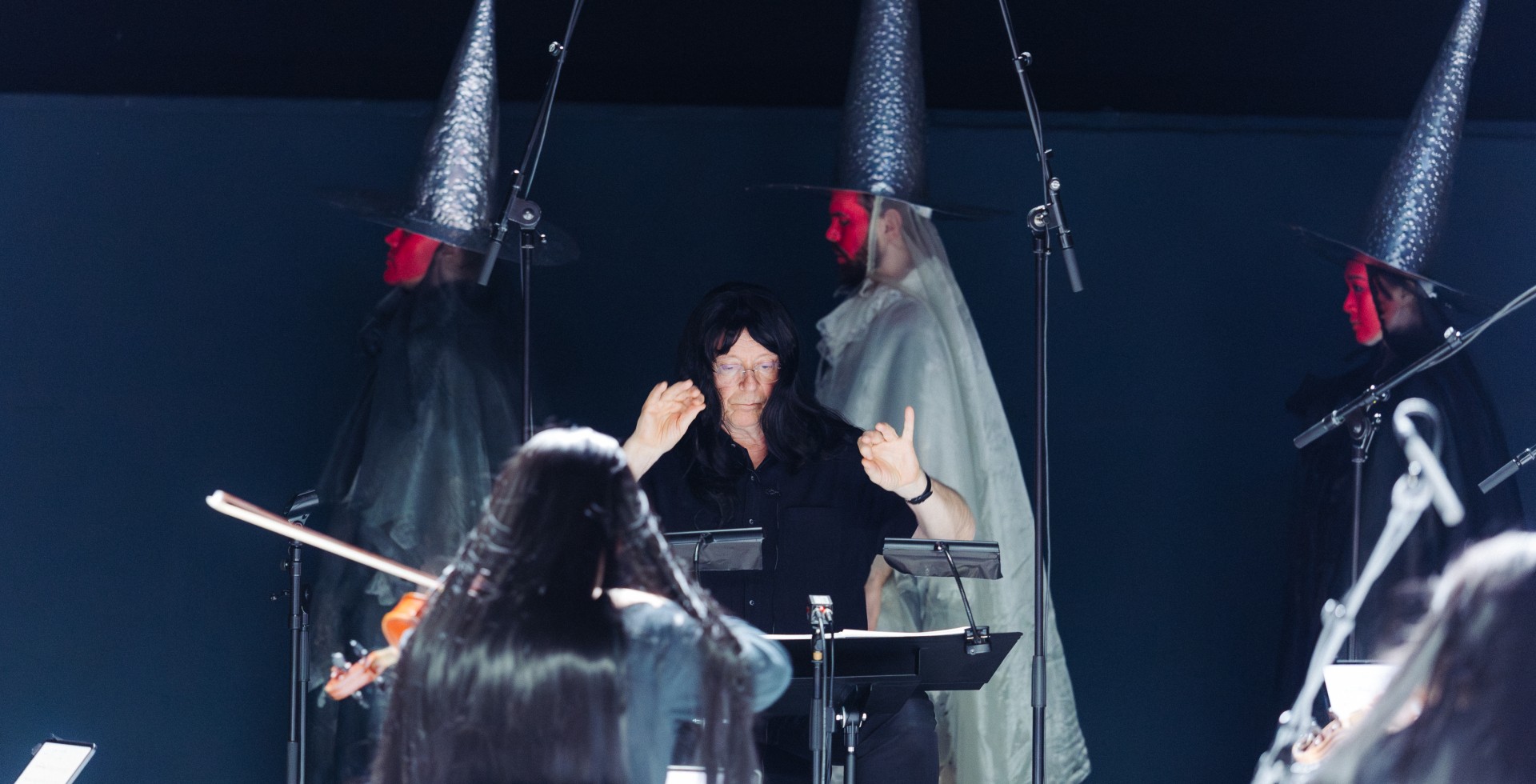
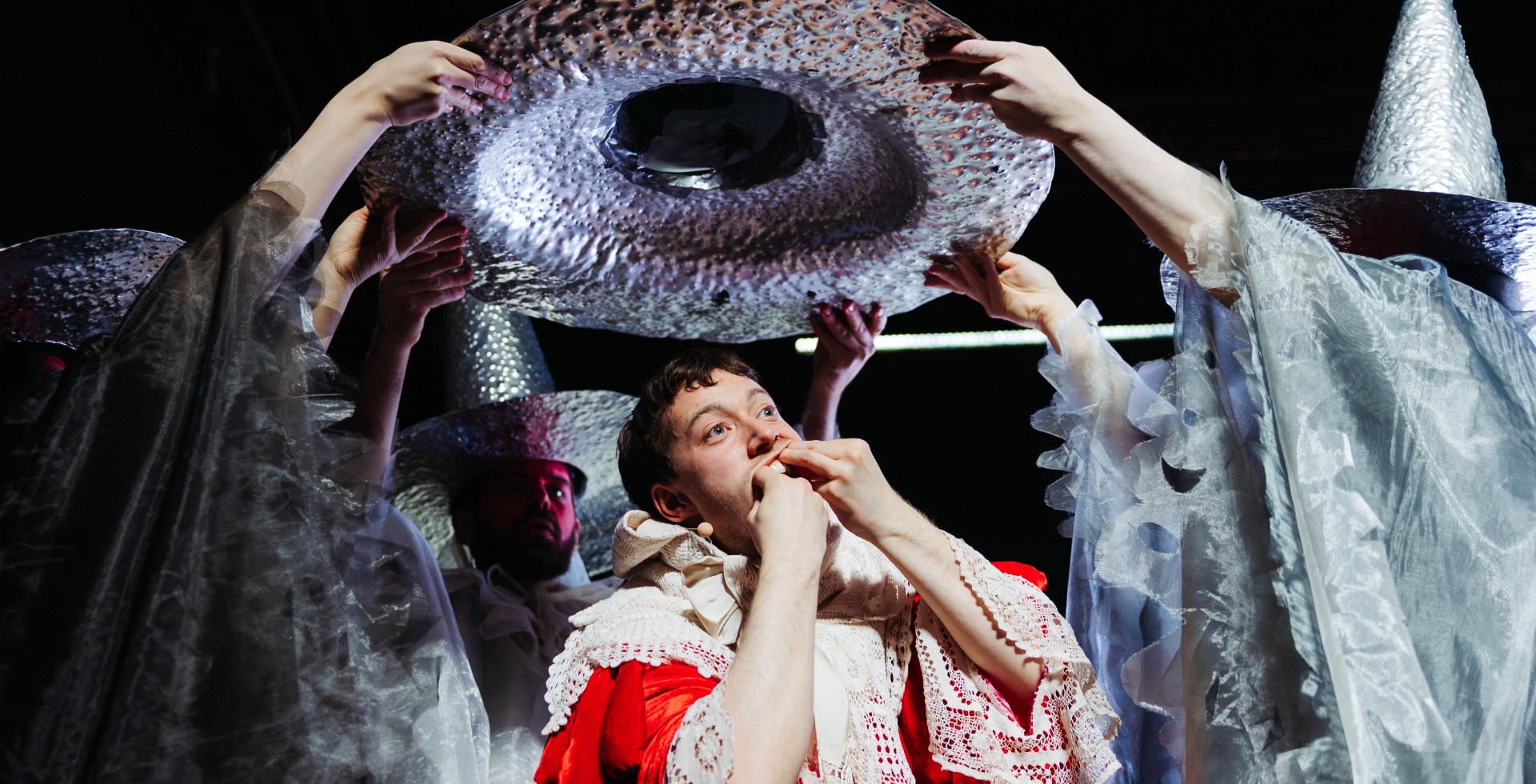
In search of “more” – of excess, of abundance – a Japanese composer encounters three ghostly nobles. They put his supposed longings to the test and confront him with what truly matters to him: his faith, his music, his culture, his father.
More money, more fame, more art, more life.
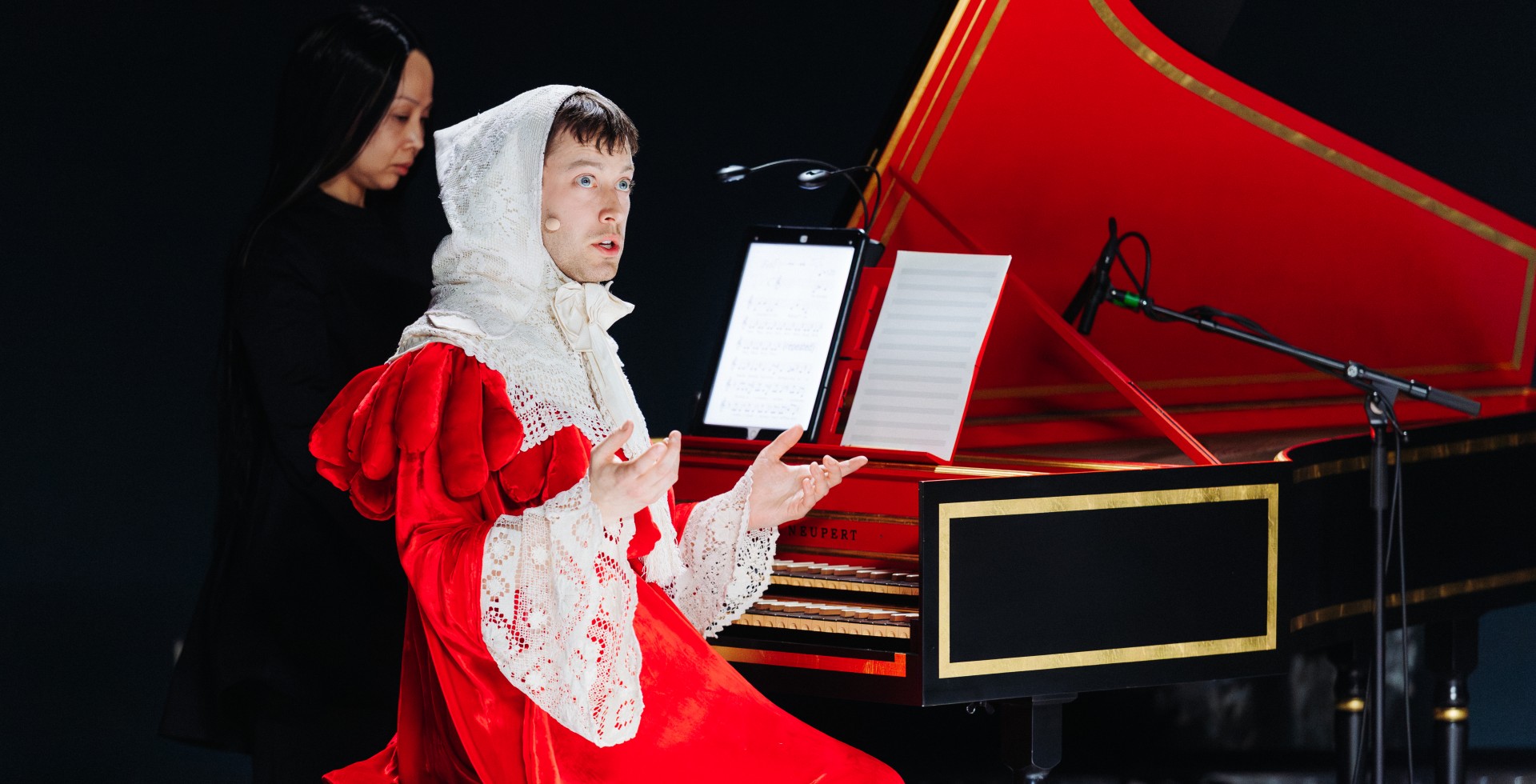
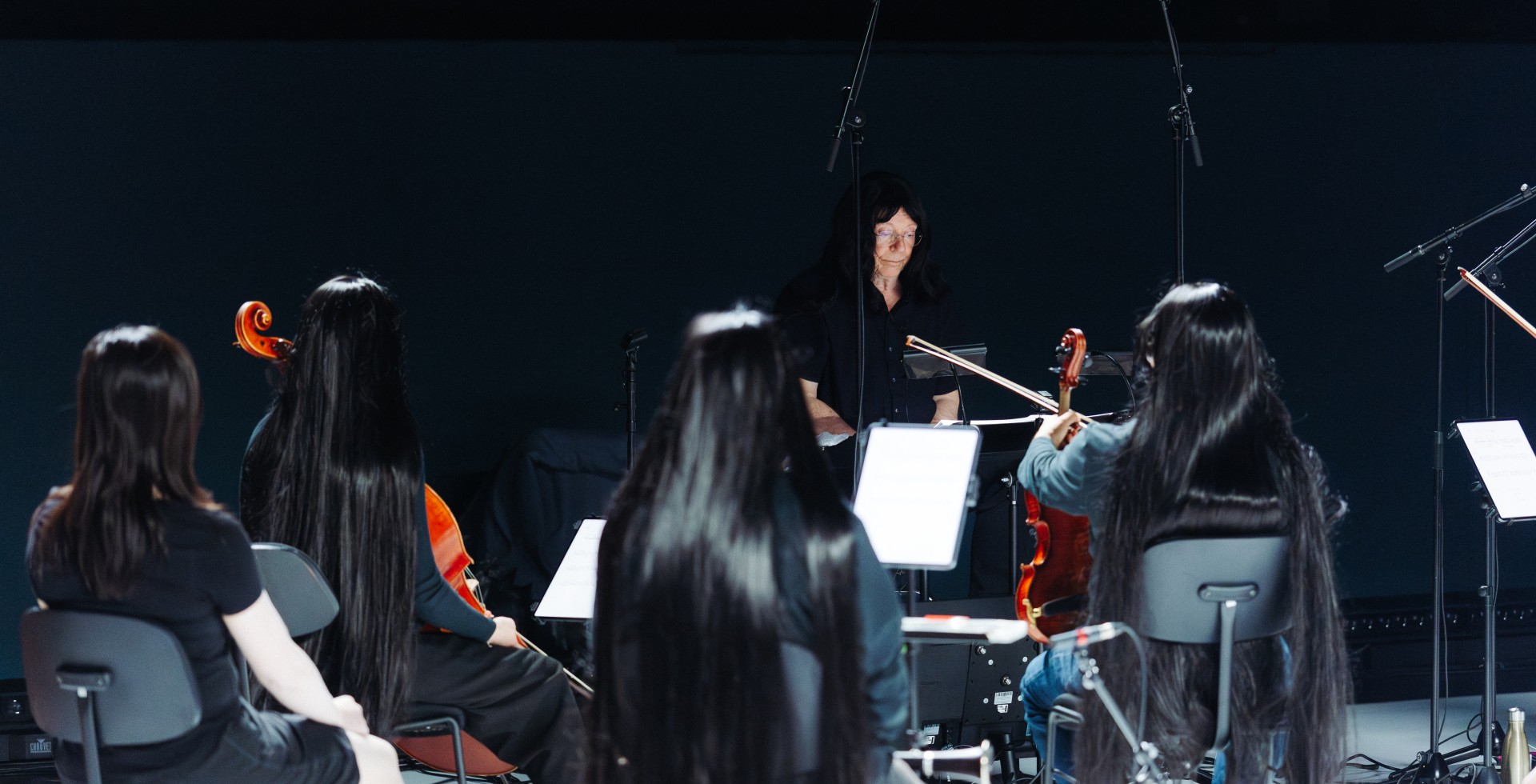
In search of “more” – of excess, of abundance – a Japanese composer encounters three ghostly nobles. They put his supposed longings to the test and confront him with what truly matters to him: his faith, his music, his culture, his father. Between European opera, Japanese ghost story, anime, and artificial intelligence, „crypt_“ weaves together the tale of „Hoichi the Earless“ into a music theatre piece about ambition, identity, and the act of creation.
Broadcast date on BR-Klassik: 30/06/2026, 20:03, Festspielzeit
SAT
16.05.
20:00
— 21:10

More money, more fame, more art, more life.
In search of “more” – of excess, of abundance – a Japanese composer encounters three ghostly nobles. They put his supposed longings to the test and confront him with what truly matters to him: his faith, his music, his culture, his father. Between European opera, Japanese ghost story, anime, and artificial intelligence, „crypt_“ weaves together the tale of „Hoichi the Earless“ into a music theatre piece about ambition, identity, and the act of creation.
Broadcast date on BR-Klassik: 30/06/2026, 20:03, Festspielzeit
Composition, text:
YURI UMEMOTOLibretto:
GARETH MATTEYMusical direction:
CHRISTIAN EGGENStage direction:
IVAR FURRE AAMScenographic consulting, light design:
JAKOB OREDSSONCostume design:
INGRID TORVUNDAnime Design, Director:
KANJI OKAIAnime Design:
AKINARI KITAYAMA, KOTA OEBISU, KEI ICHIKAWATechnical Realisation Lead:
MARKUS TARASENKO FADUMSound engineer:
ASLE KARSTADDramaturgy:
TAKUYA MAEHARASoprano:
PEYEE CHENCountertenor:
SEAN BELLTenor:
MATHIAS MONRAD MØLLERBaritone:
HALVOR FESTERVOLL MELIENOSLO SINFONIETTA
Flute:
ANNE KARINE HAUGEClarinet:
ROLF BORCHOboe:
MARIE TETZLAFFViolin:
KARIN HELLQVIST, EMILIE LIDSHEIMViola:
BENDIK FOSSCello:
INGVILD SANDNESCembalo:
SANAE YOSHIDAPercussion:
KJELL TORE INNERVIKCo-production by Münchener Biennale and Ultima Oslo Contemporary Music Festival, Oslo Sinfonietta, Black Box teater Oslo and KLANG Festival Copenhagen Experimental Music.
Composition & libretto commissioned by the City of Munich with friendly support of Arts Council Norway for the Münchener Biennale.



Entering the crypt_
In our contemporary world of cryptocurrencies and cryptofascists, the crypt, both as a space and as an idea, holds immense power. Our modern crypt is mausoleum, data centre, subconscious: a place where discoveries can be made among the ghosts and skeletons of our private and public pasts.
As a librettist, skeletons fascinate me. When we encounter the remains of ancient creatures, it can be difficult to imagine the living being that once existed around them: the flesh, muscle, skin, feathers, all lost to time. Even a human skeleton reveals little about the person who once inhabited it. And yet the skeleton remains the essential framework upon which the living, breathing body depends, invisible until after death.
For me, an opera libretto functions in much the same way: it is a skeleton, a structure designed to be clothed in music. My task, therefore, is to offer a composer the right skeleton, one that provides ample space for them to imagine and create the living, breathing (and singing) entity that will emerge from it. Just as every skeleton must be unique in order for a creature to live, every libretto must offer a composer only that which they alone can write.
While “crypt” is Yuri’s first opera, it is not my first libretto. That experience has proved both a blessing and a challenge: how can I share what opera is capable of, while also ensuring that we create a work that only Yuri could compose, regardless of operatic tradition or canon? Some might assume this tension lies primarily in cultural difference. Within the drama of “crypt”, such an interpretation is certainly tempting, particularly as spectral nobles belittle a composer they perceive as foreign. One might even read this as reflecting our own creative partnership: a European writer steeped in opera collaborating with a Japanese musical prodigy determined to reinvent it.
Tempting though that interpretation may be, our many conversations, rewrites, and redrafts revealed something more personal. The composer within “crypt_” is not emblematic of Japanese culture as a whole, but of Yuri himself. In its mixture of autobiography and metatextuality, the character is shaped by Yuri’s own lived experience of culture, rather than by any monolithic notion of “Japan.” As Yuri draws on anime aesthetics, stylized voices, and Japanese ghost stories, he also draws on his Christian upbringing, a musical childhood shaped as much by Latin as by Japanese, and countless hours spent wandering the stranger corners of the internet. Our creative conversations encompassed all of this, from memes to medieval poetry, as the opera’s skeleton gradually took shape.
Much of my previous work has centred on LGBTQ+ themes, using opera and music theatre as spaces in which to interrogate questions of identity. Yuri encouraged me to approach “crypt” through a similar lens. Yet rather than reflecting on my own identity — or that of my wider community — the challenge became turning that lens towards Yuri himself: a straight, cisgender Japanese composer. In pursuit of this, Yuri opened himself to scrutiny with remarkable honesty, determined that the opera should avoid presenting a sanitized self-portrait. Instead, he wanted it to engage with his own foibles, frustrations, doubts, and ambitions. That is not to mistake “crypt” for documentary realism; it remains a fictionalized journey through Yuri’s own psychological crypt, newly opened through music and drama.
At the root of the opera lies a ghost story familiar to almost every Japanese person, first translated into English and popularized over a century ago by Lafcadio Hearn: “Mimi-nashi Hoichi” — “Hoichi the Earless”. Like so many operas, we found our deepest inspiration in a story about music itself: a blind biwa player tempted by ghosts and ultimately saved through the guidance of a blind monk, though not before his ears are violently torn away. It is a tale in which music and horror intertwine, where the past continues to haunt the present, yet one far less moralistic than it initially appears. Although Hoichi suffers terribly, the story concludes with his ordeal granting him extraordinary fame and a new identity: a fitting parable for the composer who desires more.
Stories twist, characters evolve, time passes, and skeletons gradually begin to take shape. From our first meeting in 2024 to the completion of Yuri’s score, the libretto underwent countless revisions, perhaps more than any project I have previously undertaken. Yet this process proved both necessary and invigorating in ensuring that “crypt_” became an opera only Yuri could write. I could not be prouder to have collaborated with him in bringing it into existence.
After more than a year of writing, we have finally emerged from the crypt. Not carrying a skeleton behind us, but something far more alive: a living, breathing entity that carries the legacy of opera while singing with the voice of an anime girl.
by Gareth Mattey
YURI UMEMOTO
Composition, text

GARETH MATTEY
Libretto
IVAR FURRE AAM
Stage direction
KANJI OKAI
Anime design

JAKOB OREDSSON
Stage design

OSLO SINFONIETTA

SAT
16.05.19:15
crypt_: Was gibt's? Festival tent
45 Minuten bevor der erste Ton erklingt, fragen wir gemeinsam „Was gibt’s?“ und geben Ihnen erste Einblicke in die Musiktheaterproduktion „crypt_“.
SUN
17.05.18:15
MON
18.05.10:15
crypt_: Tactile tour Muffathalle
MON
18.05.12:30
crypt_: Absacker Festival tent
Im Anschluss an die Vorstellungen von „crypt_“ laden wir Sie noch zu einem „Absacker“ ein und schaffen Raum, um untereinander und mit den Künstler*innen ins Gespräch zu kommen.
WED
06.05.17:00
— 20:00
SAT
16.05.19:00
— 22:00